| The
Condo News print newspaper is published every other Wednesday*. It is circulated throughout Palm Beach County, from
Delray to North Palm Beach, and from Singer Island, Palm Beach and
South Palm Beach to Royal Palm Beach, in Condominium, Cooperative
and Home Owner Association Communities. For more information, or to
have the Condo News brought to your community, e-mail us or
write to: 131 Springdale Circle, Palm Springs, FL 33461 Tel:(561)
471-0329
|
|
|
On
This Page:
~
Royce Emley, "Remembering Jerry"
—
•
Essays by ...
~
"Franz Schnauzer"
~
Doug Moore
—
~
Royce Emley
—
~
Arnie Dickerman
—
~
Geoffrey Kashdan ~
—
~
Dot Loewenstein ~
—
~
Tony Senzamici ~
—
~
Tina Chippas ~
—
~
Stanley Shotz ~
|
|
|
SCROLL
DOWN TO READ ESSAYS |
|
Remembering
Jerry
By
Royce Emley, Tequesta, FL |
|
Back
in 1970 I had started an advertising agency in West Palm Beach and
I was very involved with the marketing of condos. I was placing
advertising for that condo they blew up last year down on Flagler
Drive, Juno by the Sea in Juno Beach, Sims Creek in Jupiter and a
host of other condos like the Trump Plaza that at the time was
called the Plaza built by Bob Armor. This guy Jerry Heacock showed
up at my office and told me he was starting a newspaper he was
going to call the Condo News and would give me some great
rates if I would advertise. Jerry was very brash, but I sensed a
warm heart behind the façade. He made it possible for my
fledgling advertising agency to do full page ads for my clients at
a great price. He did all the work including the writing and the
distribution back then. He made me look good in the eyes of my
clients and built himself a great paper well ahead of its time. At
first the main stream media scoffed at this small paper that only
did news articles on condos and thought it was only for Century
Village since it was the prominent condo in the area at the time
We
did business together for a few years as more and more condos were
built until I quit the business. The memory of Jerry and the
Condo News is a dim memory from another time, I retired a
decade ago and it has been over 40 years since the Condo News
came out. But when I see places like Singer Island all I can think
of is Jerry telling me how our whole economic future was going to
be based on Condos in the years to come. How true his words were.
I now go to the Condo News’ website and reminisce knowing
buried among the words, photos and electronic bytes lives the
spirit of Jerry Heacock.
—
Royce Emley,
Tequesta
FL.
|
Jerry
Heacock,
1985 |
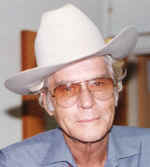 |
Editor’s note: Jerry Heacock passed away July 20, 1998 |
 |
Essays
by
"Franz
Schnauzer" |
|
(9-2-15)
Genie
in a Bottle
You’re
walking along a beach not having much luck finding seashells. But,
in the shallow water ahead, there’s a bottle bobbing gently. You
wade up to it. It’s corked and the bottle has that old, dark green
glass, so thick you can’t see through it. It intrigues you. You
lift it out of the water, bring it back to your blanket and try to
rub off the thick coat of sand. It doesn’t fall off so you rub
harder.
"Hey…take
it easy!" a muffled male voice with a definite New Yawk accent
calls out. You look around. There’s no one on the beach. You think
you’re losing it…hearing voices. You shrug and continue rubbing
sand off the bottle. "I said cut it out…you deaf?" The
voice is coming from inside the bottle. You put your eye to a
cleared spot on the bottle and gasp. There’s a genie…a mini-man
inside the bottle, hands on hips. "Pull the cork out," he
commands. "Lemme me outta here." You shake your head,
unsure of what to do. "Listen," the mini-man says, "I’m
rich. I have billions of dollars…ten billion to be exact. Let me
out and we’ll make a deal. I’m really good at making deals. I’ve
got the art of the deal down pat."
Why
does that sound familiar? You’re tempted to pull the cork and free
him. He looks as if he’s used to having his orders followed.
"Are you going to do anything bad?" you ask.
"I
love America. I want to make it better. I am the only person on
earth who can make it better. But you gotta let me out so I can do
that."
"How’d
you get in there to start with?" you ask.
"Some
blonde bimbo thinks I’m so powerful she wanted to get rid of me so
she waved her magic microphone at me, shrank me, stuffed me into
this bottle and threw it off the Cleveland Bridge. I’ve been
waiting a week to get outta here. So, let’s go…let me out."
By
now, you know who’s in the bottle. You tug at the cork and it
releases with a loud POP. A white puff of smoke precedes the
mini-man who grows bigger and bigger as he emerges from the bottle.
He’s dressed in a tailor made-to-order suit, red tie, wearing a
white cap inscribed with "Make America Great Again" in
large red letters pulled low over his eyes.
He
removes his hat and pats his hair. Every blonde hair, artistically
styled, is in place. "Okay…let’s go. Get your cell out and
get me my helicopter. I’ve got places to go, people to see, things
to do."
You
pull your cell out of your bag. "Wait…before I do, Genie,
please tell me what you’ve been saying to people is really what
you believe and that you will do what you say?"
"Hey,
I’m no genie. I’m better than a genie. I build skyscrapers, I
create empires. I’m gonna make America great again. I got plans
and I’m the only one who can make them work. Now, how about using
that cell?" He fixes that steely gaze on you. "And, thanks
for letting me out. I won’t disappoint you." You look at him
and he meets your stare full on. There is no indication of
deception. He may be a bit of a bragger but you believe him. You
believe he will put all his knowledge and energy to do what he
promises.
Water
sweeps over your blanket. The sun is setting and the tide is coming
in. Your raise your head and blink a few times to clear your vision.
You’ve been dreaming and what a dream it was! You stuff your soggy
belongings into your carryall and begin the trek to your car. You
stub your toe on something buried in the sand. A bottle…a green
glass bottle with a cork lying beside it. Was it a dream or …. |
| (2-4-15)
Living
in the Moment
Zoey’s
Dachshund tail drooped morosely. Blinking back tears, she looked at
her owner, Helen, quietly chatting with a friend on the park bench.
Zoey turned to her long-time chum, Lunchbox, the Pug. "I’ve
done everything: I’ve sat up and begged, fallen on my back and
covered my eyes with my paws, all the things my owner used to smile
at. I’m out of tricks to cheer her up," Zoey wailed.
"What’s
her problem?" Lunchbox frowned, adding even more wrinkles to
his squat Pug face.
"Every
time she reads the papers, or looks at the news on TV, she sighs and
just looks out the window," Zoey answered. "She says she
doesn’t like living in the world the way it is now…that the good
days are over for her generation. Too much killing, too many
dishonest politicians, high cost of living, good doctors are hard to
find…she just goes on and on."
"Hunh,"
Lunchbox squeezed his eyes shut, lost in deep thought. "She
lives in a condo building. Lotsa people there an’ she has family
and friends, doesn’t she?"
Zoey
shook her head, silky ears swaying. "Our condo building isn’t
all that congenial. Her family is either far away or just busy
living their own lives, and her friends are not as active as they
used to be."
Lunchbox
raised his nose, sniffing. He gave a soft Pug snort. "What’s
that?" Following the scent, he headed toward a cardboard box
next to a trashcan.
Zoey
caught up with him. "Something’s in there." She nuzzled
the box until she had pried the lid off. "Look, Lunchbox,"
she cried. There, nestled in a corner of the box, was a tiny, furry
ball. The ball moved and cried pitifully. Both dogs stared as it
unfurled itself revealing a pink nose and barely opened eyes.
"Someone dumped this poor baby here. How can humans do
that?" Zoey whimpered. Lunchbox growled, "I wish I’d
have been here when that happened."
"Zoey,
come!" Zoey’s owner called. "Stay away from that
box," she instructed
"No
way," Zoey muttered. She reached into the box and gently picked
up the puppy by the neck, as she had with her own pups years ago.
Carefully carrying her prize, she picked her way back to her owner.
"Gracious,"
Helen exclaimed. "What have you there?" She reached down
and Zoey dropped the pup into her owner’s hands. "Someone
abandoned this poor thing here! How can people be so cruel?"
Helen took off her sweater and carefully wrapped it around the now
loudly squealing pup." She leashed Zoey and holding the
squirming bundle close, Helen turned to her friend. "I have to
take care of this poor baby and get it to the vet." With a
purposeful stride, she hurried off to the car.
"Hey,
Zoe," Lunchbox huffed at his departing friend. "Looks like
this is what your owner needed, huh? Ya never know what’s around
the corner…ya jes gotta live in the moment."
Zoey
looked at him fondly. "You said it. A bad thing just turned
into a blessing. See ya, Lunchbox." |
|
Essays
by
Doug
Moore |
 |
|
(1-22-14)
The
Boys of Summer Played There
Spring
training baseball in Palm Beach County is just around the corner
which reminded me of our past history of our great game that took
place in West Palm Beach.
In
1924 the property now occupied by the garage at the Kravis Center
was a baseball stadium named Municipal Athletic Field. It was later
renamed Connie Mack Field in 1952 in honor of long-time Philadelphia
Athletics Hall of Fame manager and owner Connie Mack (real name -
Cornelius McGillicuddy).
The
stadium hosted spring training games for the St. Louis Browns from
1928-1936 and Philadelphia Athletics from 1945-1962. It also hosted
some of the greatest names in the game including the legendary Babe
Ruth, Jackie Robinson. Record attendance for baseball was on March
20, 1949 when 6,988 fans saw the A’S defeat the Brooklyn Dodgers
in a spring training game featuring Jackie Robinson on the field.
In
1962 West Palm Beach Municipal Stadium was built to replace Connie
Mack Field and hosted spring training for the Atlanta Braves and
Montreal Expos. Some of the hall of fame members that played there
were Warren Spahn, Hank Aaron, Greg Maddux, Tom Glavine, Gary
Carter, Andrew Dawson.
Municipal
Stadium closed in 1997. Roger Dean Stadium in Jupiter opened in 1998
and presently host the St. Louis Cardinals and Miami Marlins in the
spring.
Baseball
in Palm Beach County is alive and well, but the thought of Ruth,
Robinson, Mack, and the other boys of summer playing here is
special. |
|
Essays
by
Royce
Emley |
 |
|
|
(8-17-16)
Several
years ago I think I caught a little known or understood virus called
the writer virus. It comes in several strains. There’s the word
virus that compels you to write. Sometimes it can manifest into the
book virus that compels you to read.
The
very first symptom made me write compulsively. It then made me think
I was a writer. I wrote all kinds of things; newspaper and magazine
articles; a play; poetry; and even a column and stranger yet, a few
got published.
This
was totally out of character for me. I had been an artist all my
life. I selected art as a career so I would not have to put down in
words what I did or how I did it.
With
art you let art speak for itself. Now I found myself writing on
every piece of blank paper that I could find. When my brain is tired
of creating thoughts, I read books.
I
started staying up all night writing or reading, upsetting my wife.
Since I would not come to bed with her, she sent me to her doctor.
He prescribed Viagra, which changed nothing. I still stayed up all
night writing, except now I wrote naked.
Then
I couldn’t walk by a bookstore without going in and buying not
just one but two or more books. If I looked at a blank wall in my
house I imagined it lined with bookcases filled with books. I
started to read all night in bed. My wife sent me back to the
doctor.
He
tried two new approaches - taking away my library card and my
reading glasses.
These
of course did not help or solve the problem. It was a virus!
I
do have a conspiracy theory. It could be that an unscrupulous
publisher made a deal with an author who was writing a book about
bioengineering viruses and promised to publish his book if he would
provide a re-engineered virus that compelled people to read and
write.
You
think that’s a bit far-fetched, not today. The virus is out there
in books. Millions are already affected. Look around you, it has
manifested differently in each person it has attacked.
Some
people are moved to spray graffiti on walls; others write on little
yellow sticky pads and paste them everywhere. In Washington, it’s
rampant. As an example, look at the guy who wrote the tax code —
he has the virus bad. The people who write the forms and rules, even
the guy who makes the No Parking signs for Pennsylvania Ave., have
it. People from all walks of life are writing all around you. People
think we’re a paperless society. Yes, but now we have become a
word society. Have you noticed these electronic devices everyone
carries and is always texting on even while driving? In the
mornings, some people have to read every word on every page of the
morning paper before they let you see any of it. {My wife took that
comment personally.} Words dominate us, they show up carved into
benches as decorations on cakes. Of course, now we all get text
messages on phones from affected people.
There
is an exception however and that is a place that the virus has not
penetrated. It’s our schools. Children must have immunity to the
virus. If I could only figure out the antidote that keeps them from
catching it. I now do crossword puzzles, carry a book with me
wherever I go or I feel inadequate. I was never known for writing
letters, just ask my mother, but now, it makes me write letters to
newspaper editors, friends and even credit card companies.
Writing
and reading is consuming my life and I need help.
I
spent a lot of time and thought on overcoming my affliction. I first
tried an ink patch on my arm that I made myself. I talked to writers
who said they had it under control with writer’s block.
I
checked with the drug store but all they had was sun block, which
made my writing hand turn yellow. A friend suggested reading the
Bible. After reading it, I still needed more.
I
even formed a anonymous writers group, but after the meeting, I
realized I had no way of contacting them since we addressed each
other by our nom de plume.
The
guilt of spending every waking hour writing has become overbearing.
The
knowledge that I have been set upon the world to drive everyone
crazy with my thoughts and words scares even me, so I have condemned
myself to spend 20 hr. a week grant writing for non-profit groups as
a community service sentence, with the hope that, like a convict, I
might become rehabilitated and change my ways.
Then,
as I was about to give up trying to resist, a writer sent me a
solution. He told me to send in all those pieces I had written to
editors and publishers. They in turn would then send me rejection
letters and this would help build up my immunity to writing. I asked
him to fax me some he had but they didn’t help.
It
is time I stopped writing this story, it’s late, my wife is
asleep, I had better go to bed. If hopes and dreams are its cause
and effect, then I will learn to live with my affliction.
If
I make enough marks on every piece of paper I see, someday I may be
remembered, if not for what I wrote, but by the way I gallantly
fought with words and ideas this dreadful disease. If however you
are reading this in print, then you will know I lost the battle and
have become a writer. The struggle continues.
|
|
A
Life of Writing Can be Fun |
|
(4-27-16)
It
is not true that writing is a thankless job. Send your work out to
publishers and it will be returned with many thanks. The very first
thing I submitted to Poetry magazines was accepted by every one of
them. It was a check for a subscription. The next thing I sent was a
poem stating I was not looking for compensation since it was
complimentary.
They
all returned the compliment.
I
next showed my poetry to a friend who said that my work was crap. I
then noted he had never written a poem and had no appreciation for
poetry. He told me he had never laid an egg either but he was a
better reviewer of omelets than a hen.
My
first short story was rejected for being to colorful. On the first
page it was pointed out that my first character turned purple with
rage, the next turned green with envy, the next turned white with
anger then another turned blue from the cold.
When
I’m busy writing and the phone rings my wife will usually tell
them I’m busy having a poem. The only thing that has more vanity
than writing a poem is the author trying to sell it... If someone
asks me what I think was my best piece of Fiction, I tell them
"My last Income Tax return".
There
are times when ideas for a poem become personal like this one.
After
days of needing some inspiration,
With
a lot of stress and perspiration,
I
decided to sell my creative muse,
Since,
as of late he has been of little use.
I
have no idea what I should ask,
Since
he takes naps while on the task .
My
cat thought I was about to sell a mouse.
He
chased me throughout the house.
I
tried to tell him a muse is not a meal.
He
asked why do you act hungry like I feel.
That
cat does have a point I guess,
But
this muse is making such a mess.
Of
all my personal thoughts and poems.
I
should go trade him for some gnomes.
I
finally know what I have to do.
And
my muse will not have any clue.
I’ll
pretend to write a creative verse.
Instead
I’ll place on him a curse.
I’ll
tell the cat he is a mouse!
I
was accused of muse abuse for writing that one.
I
know I’m a hot poet, since I’m always being told I put fire in
my verses or my verses should be put in the fire. I knew my divorce
from my first wife was for the best, when I sold three stories about
my ex-wife’s past. You know you’re a struggling author when your
wife asks if I liked her new dress and all I could say is it looked
like two poems and a short story.
I
was never good at English in school. The only way I got through was
when asked by the teacher to name two pronouns I answered "Who,
me?" My spelling was so bad I could not spell MGM. When I
announced I had become a writer, I found friends were dropping off
food for my wife. When I asked why, she said they wanted to help us
out until I got a job. Yes, being a writer is not appreciated by the
very people I write it for, so I write for me. I love reading my own
work, laughing at the humor in it every time.
My
wife and I are compatible because of our backgrounds. She has her
sheepskin in Speech and Theater Arts, becoming an actress, and mine
was in communications. I do all the communicating and she acts like
she is listening.
I
may not be an accomplished writer … but I sure have fun trying.
You should try it sometime. Until the next time. Inflict the
comfortable with ideas.
|
|
(4-13-16)
I
decided I needed some time off and figured that southwestern
Ontario, Canada in October might be great getaway. Having friends up
on the Bruce with a cottage on the edge of Lake Huron looking
directly west at Michigan from the Canadian side might give me some
time to recharge my thoughts. I decided to drive up since while
driving I can think of ideas I might want to write about. I had been
asked to write a stand up comedy piece for a Canadian friend living
in Florida and figured I could get some local color while I was up
there.
My
first stop as I got to the cottage area was at a little coffee shop
a mile or so from where I would be staying. This is rural farm
country and as I entered the coffee shop I noticed the tables had
several farmers seated there having coffee. I took a stool at the
counter. A few minutes later a big burley farmer in overalls and a
parka settled in beside me. "Are you the guy with the Florida
license plate, eh?" He asked. I nodded yes. "What you
doing up here,eh? Come up here for some excitement, eh?" I
smiled and chuckled to myself. "What do you do up here for
excitement?" I asked. "Well on weekends we go crop
cruising, eh". "What’s that?" I inquired.
"Well on weekends we drive up and down the back concessions to
see how high the other farmer’s corn crops are. Of course that is
if them leaf lookers don’t get in our way.
I
smiled, "The trees are beautiful this time of year." I was
busting inside wanting to laugh at this stand up piece he had just
given me. After a short pause he continued, "Do you know how we
tell American tourists in Canada, eh?" I shook my head No?
"Well it’s easy; they get drunk on two Canadian beers. You
give them a Loony or a Toony and they think you’ve given them a
casino token. They ask for the best seafood restaurant around and go
there and try to order Catfish. Most of them keep asking about the
coffee shops we have on every street corner and who Tim Horton is.
The worst is an American arriving wearing a snow parkain summer
because they seen on the weather channel it was only 18 up here. Of
course 18 Celsius means it’s over 70 in American terms, eh?"
I
drank some more coffee and tried to turn the tables on him.
"Well do you know how we tell Canadians in Florida, eh? They
have to drink five American beers just to quench their one Canadian
beer thirst. And for the two weeks they are in Florida they wear the
same flowered shirt the whole time they’re visiting. Do you know
the difference between a Canadian and a canoe? The canoe tips."
There
was no laughter and I soon discovered my humor was politically
incorrect and not appreciated I finished my coffee left a small tip
and exited quickly since the smile on my face was turning it red. As
I walked out to the car, people passing waved, said Good Day. The
waving, smiling and nodding continued as I made my way to my friend’s
cottage. On arrival I commented at how friendly everyone I
encountered was that every one I passed had waved or nodded.
"Don’t they do that in Florida, eh?" "Yes but
usually with the center finger on their hand pointing up as they
wave," I answered. I don’t think he quite understood but I
thought it better that I not explain. I had already been politically
incorrect enough for one day, eh?" |
|
(8-19-15)
With
the election coming up I have been waiting for a leader to come up
with any new ideas to solve some of our most pressing problems. I
have not heard one politician forward any innovative or creative
thinking concepts that might get others to expand the idea on any
subject, and make me a believer.
I’m
an ordinary citizen who has an independent, creative thinking mind
and I can dream up ideas that have some merit to them. Let’s take
the oil problem, as an example. Since the dawn of man the main form
of energy has been trees. Well today we ignore them. A big if, but
if we harvested the sap from 10% of the trees in this country and
turned it into bio fuel we could make a big dent in our oil needs.
The government owns land that has billions of trees on them and if
we harvested the sap by putting in multiple drip pipes and devised a
system to collect the sap we could have a steady source of bio fuel.
The idea came from an article I read about a farmer in South America
who had trees at the ends of his fields that he taped for sap that
he would then mix with his diesel fuel for his tractor to run on.
The potential is there, to use the one fuel source that man has
always depended on This might sound like a farfetched idea but there
are no better ones being presented or explored to try and solve our
oil problems by those in power.
The
next problem I have a hard time with is gun control. I love guns,
they are an engineering marvel, but they are everywhere, and 40,000
people are killed with them every year. Since we believe Cigarettes
and booze kill people, we have taxed the hell out of them. Well why
not tax bullets. If you own a gun how many bullets will you need?
Having a tax on bullets would not be a big expense. I visited the
Greenbrier in West Virginia, a while back and met an old coal miner.
When he found out I was from Florida he stated he did not like
visiting Florida because of them signs. The signs he was referring
too was the signs that say we don’t server minors here. One tax
that could go toward lowering Hospital costs for those injured by
bullets. I agree it’s not a big solution to gun control, but a
small step that might trigger others to re think gun control by
focusing on the thing that does kill people: bullets.
I’m
an old man who has always believed that a problem is an opportunity,
but I don’t see any of the people who want to lead this country
taking the opportunity to solve common problems we can all be behind
and support. Of course if one did layout a plan on any problem he
would be criticized and ridiculed so they stay silent and tell us
the future will be rosy and prosperous under their leadership.
I
guess I can’t blame them. Every time I have mentioned these ideas
to my friends, they ridiculed me. |
|
Bits
& Bites for the Computer |
|
(June
10, 2015)
I
retired 8 years ago and have spent my time fixing computer problems
for all my friends and some clients who think I’m gifted in
computer knowledge. Over the last 2 years I have just about put
myself out of business because of one free program I installed on
every computer I have worked on.
This
free program is Glary Utilities Free. Just Google it to find the
download. It takes 10 minutes to download and install but once set
up select the 1 Click Maintenance Bar and run. It will clean
everything on your computer that is slowing it down, and in 15
minutes, your computer will again be happy. Any time something seems
wrong run this program. It is similar to Clean My PC you have seen
on TV but this is free. They will try and sell you a Pro version but
say no and use the free one it works great.
My
first rule of thumb with most computer problems or printer problems
is turn them all off and back on so each can reset themselves.
Another trick if it’s a printer problem is to pull out the USB
cable from the computer and place it in another USB port. This will
force the computer to reload the driver.
Over
the years I have had some funny stories about computer problems I
had to solve. On one occasion, a local newspaper editor called and
said a woman writer was trying to email a story to them but could
not. They had sent her an instruction page which she claimed she had
followed to the letter but still no story. Would I call her and walk
her through it. I called her went over the instructions and she said
it was perfect. I then replied by saying, "Then hit ‘send’."
After a few seconds of silence she said, "But that was not in
the instructions." Sometimes it can be just a click away if you
know which button to press.
I’m
asked a lot about virus programs. I now use only one, after years of
trying them all with mixed reviews and unhappy results I ended up
with one that is worth mentioning. Google the reviews for a program
called Spy Hunter 4. It’s not for everyone, but I select when to
run it, once every two days just to find anything that might have
downloaded such as Ad Ware while visiting a site. One of the worst
Viruses is "Ransom Ware" that holds your computer for
ransom until you pay, until then your computer is useless. I had
several clients fall prey to this virus while running well known
Virus software. To my knowledge Spy Hunter is the only one that can
get rid of it. Microsoft Security Solutions which you can down load
for free is the only one that can block it from infecting your
computer, as far as I can tell, along with Spy Hunter during my
research of the virus. These are only my personal selections for my
computers but they have served me well.
I
found out who my real friends were when my email account was
hijacked and a letter sent to my contact list asking them to send
funds to me in London England since I had lost my wallet and needed
to pay my Hotel bill of $400 dollars. Several of my friends wired
money to Western Union in London. I was not in London and if they
had just tried to call me ... well now I know who I can borrow money
from among my friends in the future ... Just remember, a computer is
a great tool and can be a wise friend.
|
|
(May
13, 2015)
The
other day I was driving down Dixie Hwy and passed by Howley’s
Restaurant which is just a few blocks South of Southern Blvd. It’s
a place I know well, in the late ‘90s and early part of this
century. I spent many evenings having dinner there I now live in the
north end of the county in Tequesta and rarely if ever do I get
south of Southern Blvd. So it was a small treat for me to pass by
this iconic restaurant. A flood of memories about the restaurant
came to me as they do while driving and one in particular stood out
that I would like to share with you.
At
the time (about 1999) I drove a Lincoln Town Car as a limo driver at
the airport and each evening between 6 and 8 pm I would stop at
Howley’s for dinner. It was always quiet and only a few regulars
would drop in for dinner and sit in the back room so I had the front
to myself for the first few months.
Then
a strange character wearing a raccoon hat showed up one night he
was, I guess, about 80 years old. He would order water and a bowl of
soup and crackers. The following night another older man pushing a
shopping cart showed up and within a few weeks there were other men
appearing at tables what I would refer to as street people.
Old
Dixie Hwy. has had a history of attracting strange people who wonder
along Dixie between Forest Hill Blvd. and Okeechobee Blvd., the most
talked about was the Old Dixie Witch. Some of these men carried big
plastic bags or pushed shopping carts with all the treasures They
had found for the day. One would arrive with a small dog tied to the
cart.
There
was one customer who was their age but more dignified and always sat
at the end of the counter The waitress called him Red. He would
engage the other men in conversations across the room so everyone
was indirectly involved. Some evenings he would ask them their
opinions about what was going on in the world or about politics? On
some nights I would sit with one at a table and ask about their
lives. Some told me young teenagers would pay them to buy cigarettes
or beer at Convenience stores for them. Others collected soda &
beer cans to sell for the metal. Each had a favorite hidden place
under a porch where they slept.
This
one evening the topic was the lottery which had reached an
incredible amount and Red the guy who always engaged them in
conversation asked them all to tell him what they would do with the
money. If they won it. One stated that he made the best barbecue
sauce in the country and he would travel around the Country
attending every barbeque sauce competition he could find and win
them all. Another said he would find his son who, he had not seen in
30 years and buy him a car. One said he would buy a house and invite
all his friends off the streets to come and party with him. By this
time everyone was howling with laughter at the crazy comments we
were all making with the thought of winning the lottery. Red then
asked them if they would use the money to help others less fortunate
than themselves. That seemed to trouble them since they didn’t
know how to go about helping other people but promised they would
try. Red just smiled and went on eating his dinner.
Red
was an enigma to me. He was very intelligent, and I noticed he drove
a late model car that he would park behind the building. His clothes
were polyester designs that I wore in the 60’s, and one evening I
asked the waitress about him.
She
smiled and said he was a nice guy, that he quietly paid some of the
bills when the guys could not pay their bill, by slipping her a $10
or $20 to take care of the difference. Several days later we all
noticed that Red was not there and the waitress informed us she had
heard he was at Good Sam Hospital with a medical problem. These old
men huddled that evening around one of the tables. They decided they
were going to visit him in Hospital. For the next three days they
would each chip in for one bus fare so one of them could visit him
during the day. Now arrangements had to be made since several pushed
shopping carts to the restaurant and one had a dog tied to his cart,
so who would look after their belongings while visiting Red at the
Hospital. The waitress gave them his room number and for the next
few days each took his turn going to the Hospital by bus.
After
about a week Red showed up one night and thanked each of them for
coming to visit. He then announced that if they would look under
their chairs there was an envelope taped to the bottom for them. In
each envelope was a $100 bill with a note which said that he was
taking them to their word that if they won the lottery they would do
something good in their life for others less fortunate.
During
all of this I was a bystander, a witness to it all, and amazed at
how it all evolved in front of me. I had noticed the waitress was
always quietly talking to Red and knew more than she was letting on.
I
took her aside one afternoon after arriving early and asked just who
was Red. With a big grin she informed me he lived in Palm Beach and
was a millionaire, who drove over the Southern Blvd. Bridge to visit
the restaurant because he could not stand to eat with the people in
Palm Beach any more. He said they put on snooty airs and he just
wanted to be around real people. She said I was not to say anything,
and I didn’t.
People
drifted in and out over the next year and I quit driving and lost
touch with them. The restaurant changed hands in 2004 and the people
I had met those evenings all disappeared into the darkness of Dixie
Hwy. But driving by brought it all back.
I
only hope that they lived a full life and took with them cherished
memories like the ones I have.
|
|
(April
15, 2015)
When
I was a young man of 18 I had a need for speed. Like most young men,
a car was a symbol of manhood. The city I lived in had a speed limit
of 20 miles per hour. So to fulfill my need for speed I decided to
become a race car driver.
I
took a course at a race driving school and got a novice racing
license. Which allowed me to race and earn a SCCA racing license.
During that year of racing I came in second in every race. I
accumulated enough points through that year to win a championship. I
was then offered a ride on a factory international rally team.
It
only lasted for two events. I quit. I discovered I was scared and
could not take the chance of hurting myself or other people at the
speed we were required to maintain.
However, the city driving limit had changed by then to 30 mph.
Then
at the age of 30, I moved to Florida, the speed limit was still 30
but by the time I was 35 they had moved it up to 35 mph. By the age
of 45 they had many roads with 45 mph and by the time I was 50 they
had changed it to 50.
They
then built I-95 and I noticed that the speed limit changed with my
age like 55 mph then 60 mph. When I reached the age of 70 -- you
guessed it -- they change the speed limit to 70. Now as I approach
75 years of age they are considering a speed limit of 75 mph.
Well!
I can’t wait till I turn 90.
As
I travel along I-95 at 65 or 70 mph people pass me on both sides
traveling 80 mph. Age and wisdom has eroded that need I had for
speed and I now find myself scared again. If I reach 80 years of age
I will be glad that I took that driving school because they taught
me defensive driving and I will consider it was the lesson in my
life that has kept me alive here in Florida. |
|
How
Did I Know it was Time to Retire to Florida? |
|
I
knew it was time to retire when my wife gave my favorite suit to
Goodwill and a teenager showed up at my door wearing it on Halloween
night dressed as Al Capone. I knew when I threw away my alarm clock
and let my bladder wake me up at 6am every morning.
I
knew when I mentioned Pearl Harbor to my Grandson and he said he had
heard of her. Didn’t she use to sing with a big band?
I
should have known when I discovered that the lifetime guarantees on
everything I owned had expired. I should have known when I turned on
my computer and DOS 3.5 came up as my operating system.
I
did start to realize after I found the kids at Burger King were
getting paid more per hour than I ever made per hour in my life. I
started to know when I had a garage sale and everything had a brand
name that no one had ever heard of.
It
became apparent when I remembered the corner occupied by Walgreen’s
Drugstore was on the same corner where I went to buy drugs years ago
when you didn’t need a prescription.
Or
when I remembered milk being delivered to my front door in a bottle.
But the most obvious was when the only things my friends could talk
about every day was their bowel movements.
I
knew it was time to retire when the only way I could find my way
home meant I had to find Publix food store first, everyone in
Florida knows their way home from Publix.
Little
things made it apparent when the only bird I could name was the
Early Bird or like trying to lick a stamp that is self-adhesive. But
the big one was when the can of Coffee in my kitchen cupboard was so
old I discovered it was Pre-Columbian.
When
I found out the house next door sold for $380,000 and I paid only
$28,000 for mine. When all I ever watched on TV was the History
channel and Turners Movie Classics.
I
knew it was time when my Limo driver showed up at the front door one
night in a new black suit and I thought he was the undertaker.
When
all those brown spots on my arms and hands would not wash off. When
I dropped off my teeth at the dentist’s office to be worked on.
When I discovered I had a key ring with over 30 keys on it and all I
really used were two.
I
knew it was time to retire when I ate at a fish restaurant and had a
compulsion to tell the waitress out loud that "That was the
best piece of bass I ever had in my life!"
So
now I live in Florida retired and wonder how I got here! |
|
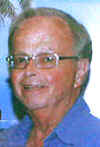
Essays
by
Arnie Dickerman |
 |
|
|
August
21, 2013
Though
my childhood years are long gone, at this particular time of the
year, there is a vague feeling of something that affects my senses
which seems to "trigger" my thoughts back in time, when
this point in time was so profound in my young life ... the good old
Summertime!
Summertime
— a kid’s most magical, mystical and memorable season of the
year. The summer solstice, according to the calendar, starts June
21st and ends on the 21st day of September. Not to me, it didn’t
then. My summers began on the very last day of school, usually one
of the very last couple of days in June and sadly came to an abrupt
end right after Labor Day weekend, when after a very bad
sleep-deprived night, I awoke to the first day of the new school
year. That was tough, to say the least.
To
best describe this I am reminded of an old popular Army song:
"Oh How I Hate To Get Up In The Morning." It seemed it was
just the other day, back at the end of June, when the final bell
rang in class to signal the end of the past school year, when I
ritually exclaimed to everyone ... "I was so happy that I could
jump up to the sky" (that school vacation had begun), which now
had so fleetingly passed.
Bemoaning
my glorious wonderful summer that was free from the chains of being
incarcerated for hours in a school building, with strict demanding
teachers, burdened with homework, early bedtime, taking various
tests, book reports on which I was required to write as a review of
the most uninteresting reading material — heck, I believe that you
can relate to the drill — my beautiful summer laden with warm long
daylight hours, no meeting time schedules, with the possible
exception of movie theater schedules — playing with friends
non-stop, just taking one’s time to eat, calls from Mom and,
paraphrasing Martin Luther King, "Free at last, free at
last."
My
God, my favorite time of the year when my entire being was
completely soaked up in a virtual Paradise, suddenly had now come to
an abrupt depressing end. My mind’s eye was still focused on the
recent past summer activities ... on that first day back to school.
My thoughts were drifting back to punch ball, stickball, Johnny on
the pony 123, softball, dusting off and polishing my bicycle for
long delicious "trips", ring-a-Levio, hide and seek
("come out, come out wherever you are" shouted by whoever
was "IT"), box baseball, five-ten, flipping baseball
cards. After unending playing until exhaustion set in, sweaty and
deliriously happy, my cohorts and I would go to Lou’s Candy Store
for refreshing cold sodas.
Yes,
those summer days were exhilarating and wonderful. This era also was
a time before television, video games, Internet, Smart Phones,
X-Box, and the wonders of today’s technology, yet hardly and
barely understandable to my grandchildren, that all of my peers,
boys and girls, found a myriad of activities to enjoy and loved
every minute of it. It seems that the word "bored" wasn’t
invented yet either. Even a heat generated thunderstorm followed by
streams of flowing water which ran into the "gutters"
alongside the "curb" allowed us to use our creative
ingenuity to float discarded ice cream sticks, imaginary kayaks if
you will, and race them down the street toward the sewer drain.
July
and August also meant families spending hours at Brighton Beach or
Coney Island. Sunburned bodies arriving home after an ordeal of
subway and bus travel (we didn’t even own ONE automobile) while
still wearing our bathing suits, damp and filled with sand, as an
uncomfortable souvenir from a terrific fun filled day at the beach.
But, oh, those nights, with aching red hot skin smeared with
Calamine Lotion to soothe the inflamed skin when contacting the bed
sheet, the smell of citronella to ward off the pesky mosquitos that
somehow came through tiny openings in the screened open windows. We
did have a huge exhaust fan held in place between the window sill
and the window itself. Of course it just circulated hot summer air.
I
forgot to mention that we didn’t have air conditioners in our
apartment in my Brownsville, Brooklyn neighborhood either. Some
neighbors of our apartment building would sit on folding chairs half
of the night under my window yakking away and trying to "keep
cool." The sounds of their chatter and radios playing music
from the Big Band era in the background. As we occupied the ground
floor front apartment, this acted as "white noise" and
would lull me to sleep. An occasional ice cream truck vendor would
approach them, calling for their attention with bells jingling and
playing a maddening musical chime which would disturb me, giving me
another attempt to doze. These same ice cream trucks, Bungalow Bar,
Good Humor, Rich’s Ice Cream would return during the day, as would
"ride trucks", vehicles refitted to have a whip ride, a
swing ride, another with a merry- go- round, still another that
would spin. Once on a bet, one kid asked to ride alone at top speed.
That’s when he, Charlie Levine, turned green and threw up, and if
I remember it correctly, Charlie did win the bet!
Without
hesitation for yet unthinkable dangers, our parents allowed us to go
unaccompanied to Ebbets Field, to see our beloved Brooklyn Dodgers.
I was fortunate enough to watch in person Robinson, Campenella,
Erskine, Furillo, The Duke (Snyder) and Hodges and Reese. We would
make frequent trips to root and shout for our "Bums." Then
be perennially disappointed when our team would be beat by the
Yankees in the fall series. For it’s not only "A Long, Long
Time from June to December", as the song goes, it was really an
eternity from one summer to the next. Now with shorter days, longer
nights, cold and snowy days to come, Fall was now upon us with the
promise of a cold, gray, snowy winter to follow. Yuk! Seemingly
suddenly, and without warning, as if I was thrust into a
time-machine, my life was beginning to speed fast forward. The
summers of my life began to come ever so much faster.
Taking
stock of myself, my "schooling" days have been long gone.
I don’t even go to "work" anymore. At last I have my
free time. I now have all of the time in the world to play punch
ball, but I really don’t feel like playing punch ball or running
bases or any games of my youthful years. In fact, neither do my
friends. OK I play hide and seek with my younger grandchildren, but
it’s different now. Even if the ice cream trucks did come here to
Covered Bridge with their cholesterol loaded trans-fat laden, heart
clogging delicious choices, it isn’t good for me. I really hate
the gas and heartburn it can give to me anyway.
Sunburn?
My dermatologist hates the sun and insists I hide from it! But
today, I do have my computer, the Internet, even an I-Phone. I could
even watch TV like our exciting community (sic) closed circuit
channel 63. I may even fall asleep during the endless repetitive
loop. My peers and I, instead of discussing the stats of our
favorite sports teams, are beginning to keep score of who had
prostrate problems and their respective PSAs. Yes, the summer of my
youth is long gone, and now I have the summers of my old age. Yes, I
loved summers back then, but truth be known, I love summer even more
now, particularly here in south Florida. I love every season now as
much as I loved summer way back then. Why not? I can’t complain
— I’m alive and well and that in itself is a wonderful activity
year round! |
|
Happiness.
What makes me happy? What being happy means to me: The word
happiness to me requires more than a simple answer. What once made
me happy instantaneously or long lasting, as I analyze the source
of being happy, were made up of very diverse situations. As a
young child I received instant gratification which at that moment
in time made me happy. For example a new toy or game, or a
chocolate ice cream soda, my "new" second hand bicycle,
hitting a "homer" in a stickball game, riding on the
"whip", "swing" and merry-go-round, that
arrived on a "Ride-Truck" on my street during
Summertime, a sweat laden Punch Ball Game, followed by the
participants cooling down at the local candy store. Most
definitely the happiest as a school-child, occurred when June 30th
arrived each year. School vacation began, and it was legend with
my folks that on that particular finality of school I would
announce: " I am so happy that I could jump up to the
sky". But I as most children too soon realize, happiness isn’t
an unending state of lasting euphoria. The once new toy or game
wasn’t thrilling after a while and in fact was tossed aside
replaced with a desire anticipating the next new exciting gift.
The delicious chocolate ice cream soda sipped by straw down to the
bottom of the vase-like glass , disappeared too quickly and was
gone together with the satisfaction it brought while it lasted.
Striking out next time at bat in the stickball game immediately
took the thrill of the "home run" that preceded it. The
truck rides lasted but for a short time, until Summer was over
along with the enjoyment they brought. July and August sneaked up
to a sudden realization that Labor Day was approaching fast and
that the feeling of joy as if I was walking on a cloud, would soon
turn into a source of preoccupation of going back to school. Why
you may wonder, or already have guessed … that my wonderful
school- free days. And the fun Summertime brought, was fleeting
too quickly, and you know how "time flies" when you are
having a good time. While the dreaded specter of the end of this
most joyous season was coming to an end, and being reinforced by
the reminder as the "back to school" sales were
advertised in August, was enough to put any kid into a funk
As
the years came and went so did the sources of happiness arise and
wane. Appropriately the Summer vacations were now replaced by time
off from a job, the bicycles now were replaced by the joy of
purchasing a new car, I still enjoyed then and do now love
chocolate ice cream sodas, but the street games were left for the
next generation to enjoy. As an adult the world opened up to new
vistas of happiness to explore and find the joys that life offers.
Happy times, being in love, marriage, the birth of each one of my
three sons, observing their childhood and their becoming
successful adults, creating their own families, which brought me
the greatest joy and happiness in my life, when they presented me
with each one of my two grandsons and two granddaughters.
Now
as I share my life with Maddy, looking back on 52 years of
marriage, I find a great deal of happiness in the accomplishments
that Maddy and I having created in what I consider our own
dynasty. Of course along the way there were tears of joy as well
as tears of sadness. We both comforted each other when there was a
miscarriage, when illness struck, and when we lost our parents.
Looking back for the most part though, the happiness of our years
together overshadowed the sad times 1000 fold.
Retiring
and subsequently relocating to Florida, and living here, has
provided my most recent perception of what happiness means to me.
Whether
being a child or an adult a myriad of sources of being happy can
be fleeting or last a lifetime. Too numerous and obviously almost
if not impossible to hone in on. What makes me happy comes from
what I consider my success, contentment, fulfillment,
satisfaction, security, serenity, relatively good health, A low
PSA, together with a clean bill of health after my last Doctor
visit, accepting what being relatively perceived by fellow
residents as a "kid" in Covered Bridge, but in reality
an older man of 75 years of age. Finally finding the time and
freedom to pursue and express my own suppressed desires, be it
singing, or writing. Observing my progeny being my children and
grandchildren, hot pastrami on rye sandwiches from the a local
deli, my wife of 52 years, residing in South Florida, particularly
in Covered Bridge. … I would say that I can best describe
HAPPINESS being in a "good place in life" …….in
essence a happy State Of Mind! |
|
The
Yahrzeit Candle
Special
to the Condo News
By
Geoffrey Kashdan
Originally
published in the Condo News on Dec. 30, 1999 |
|
For
me, it was a day no different than any other day. There was
breakfast to make and a work day to face. It was a day in which
the routines of my life carried me from place to place with little
thought. Predictable sameness. Perhaps that is why I forgot.
That
day, you see, marked a major event in my life and in the lives of
all of the members of my family. That day was the anniversary of
the death of my father. It was my father’s Yahrzeit. Although I
had forgotten, forgetting that Yahrzeit was something my mother
could never do. "Fifty-two years with a man; you don’t
forget!" she would say. But forgetting stuff like that is
something I would do.
And,
thus, the annual phone call to the errant son, "Jeff, did you
get a candle for your father’s Yahrzeit?"
Actually,
I had purchased the special candle some months ago. "Yes,
Mom, of course. And I will not forget to light it." I even
made a phone call to my answering machine, "Jeff," I
ordered, "light the candle. Just do it!"
In
spite of everything, I forgot to light the candle until the end of
the day. Why, I wondered, am I taking part in this senseless
ceremony. I pondered on some of the many silly customs I knew from
the T.V. National Geographic specials and from my own world
travels. People do all sorts of strange things, I thought, as I
lit the candle. And now I am doing something strange myself. In
this house, with me as its sole occupant, I am lighting a candle
to a man long dead. NO one would know if I did or did not light
the candle. So, why?
The
Yahrzeit candle is no ordinary affair. It is the size of a juice
glass and, in fact, the glass container of the candle becomes a
juice glass in many Jewish families. Care must be taken when
purchasing the Yahrzeit candles throughout the year so that, once
the candles are melted away, the remaining glass containers will
make a matching set of juice glasses. I have always suspected that
the people who design Yahrzeit candle glasses keep in mind what
the empty glass would look like with orange juice inside instead
of a white candle. (What do you call a person who designs Yahrzeit
candle glasses — a Yahrzeit Engineer?)
Aside
from the juice-glass shape and size of the candle, the other
salient fact about this special religious artifact is that these
candles burn for up to twenty-four hours. This makes the placement
of the candle a concern. Certainly, no one should lose a house to
a Yahrzeit candle fire. That would be more than a shame; it would
be blasphemous.
So,
as I lit my Yahrzeit candle I considered the possibility that the
heating of the glass might do damage to my table top. An easy
solution is to place it on a ceramic plate. I got one of my new
plates and placed my father’s candle on it and put the combined
candle-plate on the dining room table. I wondered if my father
would have liked the set of dishes the plate came from. I imagined
that he would. The set has a simple design and he liked simple
things.
Turning
the lights off I let the glow illuminate the room. I had to admit,
the soft light of the candle made that table and Italian leather
chairs look so good. My father would have liked those chairs too,
and for the same reason. They were of simple design. Had he ever
seen them? Some deep thinking determined that I had no idea of
when I bought the dining room set.
But
I did know that my father died in 1987. 1987! Wow! Could it have
been that long ago? He’s been dead eleven years now. It just
doesn’t seem possible. My youngest daughter was only nine years
old then. I remember that he requested in his fading voice that
her photograph be placed over the face of the clock in his
hospital room. He said that he hated to lie there in bed and watch
time passing. Time, he often said, was his enemy. He felt tortured
by the hours, as well as the pain of tubes and needles. Time also
exacerbated the boredom and intensified the hopelessness. Better
to look at the picture of his smiling granddaughter. Her face
brought him the only antidote to the misery that the technology of
medical science forced him to suffer. If he had to stay alive then
he could at least find some comfort. Her picture on that clock
made the time endurable.
The
candle burned with a steady flame. A warm orange glow softened the
features of my dining room and eased away the flaws of scratches,
dust and smudge marks on the walls and counters. Everything had a
magical radiation.
I
wondered what the candle would "do" to my patio. The
patio is my pride and joy. I spend hundreds of hours and dollars
cosseting the plants and enhancing the two fish ponds, one with a
waterfall. I took the Yahrzeit candle with its new ceramic plate
base outside. On the patio it did wonderful things to the water in
the ponds. My father would have loved this. In fact, he did love
my patio. The candle sat in the same place he sat during the last
years of his life.
My
mother would call me. "Jeff, would you ‘watch’ your
father? I have to go out and I can’t leave him alone... not in
his condition." I could hear the angst in her voice. His
dependency weighed heavily upon her. And I was their only child
within two thousand miles.
"No,"
I replied. "I will not ‘watch’ my father. But I will
spend time with him … father-son time, man to man. If he
would like to spend time with his son, I would love to have him
over."
"Thank
you," my mother responded. "Thank you."
Right
there, where that candle now burned, my father sat and worked on a
project I had prepared for him. When I was a small boy, he would
prepare easy wood projects for me. Now I had prepared an easy wood
project for him. He would make a tiny puppet theater for Lara, the
granddaughter whose picture helped him to cope with time in his
final days. My father, now "my son," sat where that
candle glowed and sanded the wood work for the puppet theater.
Father and son had transferred roles without a word, almost too
easily. He was so happy to make that theater for his
granddaughter. I remembered his joy. Yes, I remembered it well.
Now,
eleven years later, I sat by myself on my patio. The waterfall
made the only music I needed and that Yahrzeit candle
bathed the leaves of the garden with just enough light. I sat
there in the glow of the light and the memories, and, as in an
epiphany, I finally understood the reason for a Yahrzeit candle.
After eleven years of his absence, I had spent a quiet, simple
evening with my father. He would have loved that. He loved simple
things.
|
|
Dear
Diary:
Remembering
September 11th
By
Dot Loewenstein |
 |
|
|
I
had train tickets to head to NJ on 9/11, arriving at the station
in WPB learned the trains were going only as far as Richmond - no
explanation - and my friends drove me back home where I arrived in
time to turn on the T.V. (George) was already in NJ, and my
"diary" helped me thru the next few days, until my trip
was planned again for two days later. Here it is:
Amtrak,
northbound from West Palm, noon Thursday, Sept. 13, 2001:
The
station is quite crowded, due to the absence of available
flights.Upon learning the train is already 90 minutes late, no one
complains. We start comparing our reactions to the WTC tragedy.
The most prevalent comment is that we have learned to re-order our
priorities. Things that used to seem important no longer are.
Orlando,
3 p.m.:
In
the lounge car I overhear "John" explaining to the
conductor that he had prepaid for a sleeper, and cannot understand
why one is not available now. On doctor’s orders he is taking a
train, because he had a heart attack five days earlier.
Jacksonville,
10 p.m.:
Many
passengers detrain for the 20 minute stop, in order to view the
television in the station. No further attacks, no immediate
retaliation. All breathe a sign of relief. I’m now in my sleeper
and see "John" with wife "Mary" in the same
car. A no-show gave them the rest they needed badly. They confide
that Mary’s father had died the day after John’s heart attack.
Mary had to choose between attending the funeral or being at her
husband’s bedside.
Alexandria,
VA, 3 p.m., Friday:
I
note a man sitting on the platform with a red, white, and blue
ribbon on his shirt. He’s not waiting for a train, simply
grieving. The train slows as we pass the Pentagon. Most passengers
have gathered in the lounge car. Silence reigns as we pass other
Washington landmarks. There is a sudden need to exchange names and
addresses. We are no longer strangers.
Newark,
NJ, 7 p.m. Friday:
My
husband is waiting on the platform for me. I’d been concerned
since cell phone calls were not going thru and I couldn’t reach
him. Leaving the station, we walk several blocks to the car
because there is a five block perimeter guarded by FBI and bomb
squads - quite sobering. This is the time to show support by
lighting candles. During the ride, we pass many lit candles, on
sidewalks, curbs, in front of houses. Newspapers had been saved
for me, and in one I discover a photo of our son, with his Rescue
Squad, transporting a victim.
Amtrak
southbound October 1st:
A
young man sitting in front of me is looking at newly developed
photos he took on September 9th, of the WTC, with the Statue of
Liberty in the foreground. Visiting family in Jersey City, he had
an unobstructed view of the event, but no photos of the tragedy -
"I couldn’t look."
In
the lounge we meet two Rescue Squad workers, returning south after
eleven days working at the WTC. Everyone wants to shake their
hands and thank them. Their response is, "The New York Fire
Department deserves all the praise, not us." |
|
Essays
by
Tony Senzamici |
 |
|
At
the risk of sounding like a male chauvinist (which I probably am and
love it), I would just like to say that after 70 of my 78 years I’m
still trying to figure out women, I would like to mention at the
start that I love my wife dearly, she is the best thing that ever
happened to me. But sometimes, I just want to bang my head against
the wall.
I’m
sure that I am probably speaking about at least 85% of the woman on
the planet. What is it about these women that they set their life’s
schedule chiseled in stone with no room for variation? Allow me to
explain.
For
example, I will use the wife’s events. Every Saturday is cleaning
day, and I have to keep reminding her that she cleaned last
Saturday. How messy can a place get in one week? She keeps giving me
the evil eye when I mentioned it.
Now
let’s talk about the haircut ... If her hair was any shorter, she
would have to change her name to John. She gets more haircuts than I
do. Fingernails, toenails and other accessories must be done
religiously every two weeks. I told her I would buy her a nail
clipper and she can do her own nails and it would be much cheaper.
She doesn’t even scratch my back with those long talons. Why would
anyone want to handicap themselves with those claws is beyond me.
Now
we come to special occasions in the family. We have an annual
calendar that has two or three birthdays, anniversaries, or other
special events every month and she insists a card must be sent with
some monetary gift in each card. I tried to explain they will still
love us just the same with just the card. But she will not hear of
it. Have you seen the prices on some of these cards?
I
made the mistake one day by going into a shoe store with her. She
wanted to buy a pair of shoes, what a disaster! Within 15 or 20
minutes she had approximately 12 or 13 boxes of shoes opened up on
the floor. After trying on all of them, she narrowed it down to
three pair. Now we have to make a choice of which looked better and
at this point, I was getting nauseous. When I want to buy a pair of
shoes, I go into a store and get a pair of shoes. I look for a pair
of brown dress shoe 9½ wide, I try them on. If they fit, I am out
the door in 15 minutes. I dread if she’s looking for a top or
blouse, she goes through about 15 and 20 tops and then doesn’t buy
any, and if she does buy one it goes back the next day for some
reason or other.
Now
my pet peeve is the wife’s car. With all of the accessories that
she has to have, somehow she thinks that she is driving around in a
solar powered car, she has no concept that the car has many moving
parts and that they have to be serviced. As long as she turned the
key and the car starts, that’s the end of her responsibility. I
have to keep reminding her that the car needs oil, water, and gas in
a little bit of TLC. I have to keep reminding her that when the gas
tank needle is on E it does not mean Enough it means Empty. Again, I
get that look of disbelief and she thinks I’m making things up.
Early
in my marriage, I thought it would be a disgrace if we went out to a
restaurant and my wife paid the check. I have since changed my way
of thinking and I now direct the waitress to give the check to the
wife even though comes out of the same "Kitty." I love
this Women’s Lib stuff. I can’t tell you how many dirty looks I
get from the waitresses, but a lot of winks from the waiters, may
God help us. |
| August 21, 2013
I
was just wondering how many readers out there have the same problem
that I have had for the last 78 years, namely a name that when you
look at it on paper seems like it’s very difficult to pronounce,
but in reality if a fourth grader looked at it and pronounce it
phonetically it would probably be 75% correct as opposed to some
adults who look at it and can’t even pronounce their own name.
As
an American of Italian descent I have and am suffering the pain of
having a surname that appears to some people to be very difficult to
pronounce. Most Italian names, like Indian names have meanings. And
it’s mainly derived from our descendents in the old country,
possibly from a man’s occupation, hobby, family tradition, or any
of the things in the man’s life that the Village people tag him
with
I
also have an unfortunate problem of what letter of the alphabet your
last name begins with. Starting with kindergarten, because my last
name started with an ‘S’, I was always next-to-last to receive
my little carton of milk, and etc. or if anything that was dependent
on being alphabetical.
While
in high school, the problem still continued, so-called friends of
mine would miss – pronounce my name deliberately and make it sound
like a female dog, of course that caused me to react with enough
force to get me expelled for a week, and the loss of another friend.
As
an adult, I was asked many, many times why did I not change my name
legally to something much simpler to pronounce. But my answer to
every one of them was, "it was my father’s name and it served
him well for 65 years until his death." He worked hard and
enjoyed a good reputation in the community as a whole, my brothers
and sisters also were taught to respect and honor the name. I
honestly think that if I had to be in business or show business I
would definitely would have had to change my name. Could you picture
this — Now starring " Tony Senzamici in High Noon."
It would be more fitting for the Godfather series.
On
one occasion, I had to request some assistance from an organization.
But before doing so, I had to contact a screening representative of
that organization. When she asked me my name, she went ballistic
because she couldn’t spell it or pronounce it and screamed into
the phone, "Why didn’t you have that name changed?" As
you would guess, her name was equally as hard to pronounce as she
was first-generation descent of another imigrant group. I cannot put
in print the words I used to correct her, but she certainly became
very apologetic while I took a couple of minutes to retrain her.
While
in the service, the story continues, one Sgt. in my unit constantly
mispronounced, ridiculed, maligned my name and heritage to the
extent that I had to virtually send him to the hospital with various
contusions, cuts, bruises, and a broken nose, all of which caused me
to receive a Special Court-Martial and 90 days hard labor in the
brig for striking a noncommissioned officer. It was the most
satisfying punishment I have ever received. Of coarse, it negated my
good conduct medal.
Of
course, after 77 years, the saga continues, now while in the doctor’s
waiting room, I have to constantly be attentive when the
receptionist comes out and very softly calls out a name and if it’s
mispronounced beyond recognition I know it is me they looking for.
The other great advantage of having a very difficult name to
pronounce is the ever ending telephone marketers. If they cannot
pronounce my name, then I know it is not a friend or family and I
immediately hang up.
The
true friends I have pronounce my name perfectly and I thank them for
that. People that I know that have difficult names to pronounce I
will make it a point to find out the correct pronunciation as to
avoid embarrassment for me or them.
Ironically,
I have gone on the computer and typed in my last name and I was
amazed of all the people in the United States with the same surname
that I have. And I am not related to many of them. And in Italy in
my parents home town, the name is as common as Smith or Jones is in
the United States. (Somebody in Naples was having a ball.)
I
used to cringe while waiting for names to be called alphabetically
for any event or circumstance and was quickly to respond to any name
that resembled mine whether it was mispronounced or not.
I
used to envy my friends with names like Larson, Riley, Wilson and so
on. But of course, they had nothing to defend, with no anxiety, no
frustration, no embarrassment and no anger. How dull can life get?
When
I order a pizza by phone instead of giving them my correct name and
having to spell it, I simply say José, it saves me a lot of time
and aggravation.
Of
course, I also have to contend with smart alec Italians who always
had to approach me and asked me if I knew what my name meant in
Italian. Of course, I had to tell them after so many years living
with it how stupid do they think people are.
Just
for the record the name Senzamici means "without friends,"
but I can honestly say God has blessed me with more friends than I
think I deserve. If the origin of Italian names is true then there
must’ve been an ancestor of mine in the old country who must’ve
been a real SOB . Incidentally, name is pronounced Sen-za-mee-chee.
I
don’t know how many more years the good Lord will give me to enjoy
the privilege of defending my family name, but so far at times it’s
been a blast. |
|
Invention:
A Product of Necessity |
|
Since
ancient times, there have been many, many inventions, from the wheel
to the cotton gin to computers — some out of necessity and some
for personal pleasure. But, in my opinion, no invention has been
more endearing and loving to my heart than the good old TV REMOTE.
I
am sure all you seniors out there remember the times when we had to
get off our duffs to adjust the sound, the contrast or color or just
to kick or slap the TV to unscramble the picture. Sometimes, that
was the only exercise we got. Fortunately, I had human remotes —
my two young sons who did that for me. But that stopped when they
got older and wiser.
I
am sure that the younger generation of today think that some of
these devices we have today were with us from the beginning of time
and never give it a second thought.
In
my home, if my wife and I are in the same room together, she is
forbidden to hold the remote because of the drastic likes and
dislikes we have on what programs to watch, but she is very
accommodating, thank God. Otherwise, there would be an attorney
involved.
I
admit to being a notorious, compulsive, channel surfer which drives
the wife crazy. I even surf through programs I like. I have been
known to doze off while watching TV. The wife says I even change
channels while dozing. I had to exchange remotes 3 different times
in the past because they wore out.
I
can watch 2 or 3 different TV programs at once by repeatedly
watching segments of each show, and enjoy them, and I can still tell
you what the programs were about from beginning to the end. The wife
just looks at me and shakes her head in disbelief.
Sometimes
I am on the verge of panic when I can’t find the remote because it
slipped down between the cushions on the chair, (always the wife’s
fault).
While
traveling long distances on my many trips up north and I have to
check into a motel, the first thing I check is the TV remote, then I
check the cleanliness of the room and toilet. I have checked out of
a few motels because of a bad remote or TV. By the way, I always
have two AA batteries with me just in case their’s are dead or
weak.
Once,
I was on the verge of a nervous breakdown while in a hospital for 4
days because of an antiquated remote and TV reception. Shouldn’t
my hospitalization plan cover that?
I
am thinking very seriously of having a ‘living will’ drawn up
that a universal TV remote be placed with my remains, just in case
there is a big flat screen TV on the "Other Side," with
cable, I hope.
My
life would be complete if a remote were to be invented that would
have the wife bring me my drinks, snacks and other "essential
services" whenever I want them. What a wonderful world this
would be, eh guys?
|
|
Dog
+ Children + Books
=
Eager Readers |
|
Photo
by Tina Chippas
Above
left: A little boy reads to Ella, the dog.
Above
right: Kathleen Hoerbinger, Ella’s owner/trainer
sits
with a little girl as she reads to the dog. |
|
(June
11, 2014)
Ella,
a four-year-old wire-haired dachshund and her owner/trainer,
Kathleen Hoerbinger, are part of a new program at the North Palm
Beach Library. No, Ella doesn’t read but she surely is encouraging
young readers who come prepared with a book and settle within
petting reach. Ella is a trained, registered therapy dog whose
disposition says, "Read away, I’m listening." If Ella
could speak, she’d also say that she’s not judging
mispronunciations, decoding hesitations or speaking shyness. Ella
doesn’t laugh at or correct the child’s mistakes. The child
feels empowered that he/she knows more than the dog and is able to
practice reading skills while building self-esteem, associating
reading with a relaxed, pleasant atmosphere. Shy readers bloom and
children who are unfamiliar with dogs are able to spend time with a
gentle dog. In fact, Ella is so relaxed, she zones out and seems to
enjoy just listening to her little friends.
There
is evidence that children who read to dogs are comfortable because
there is no pressure put upon them as when they read to other
children or an adult. Learning to read is more about overcoming
fears than about reading ability. Ella poses no threat. She doesn’t
judge or criticize mistakes. She just listens. Children feel more at
ease in sounding out words and proceed at their own pace. Often,
children go home and read to their pets.
Ms.
Hoerbinger is the "guide on the side" during these
sessions. As laid-back as her furry companion, she helps with
pronunciation, asks leading questions on content and supervises
reading practice necessary to help the child gain fluency as a
reader. Ms. Hoerbinger creates an atmosphere of relaxation and
enjoyment so evident in the session I saw. Children eagerly wait
their turns to become a part of the cozy and pleasant reading
session.
Kathy
and Ella are a team who visit the North Palm Beach Library’s Dog
Read each Wednesday, at 3:00 p.m. and visit patients at the Jupiter
Medical Center Pavillion’s Sub-Acute Rehab Center. Kathy says even
the simple task of a patient brushing Ella’s coat is a valuable
exercise in strengthening fine motor skills. Kathy and Ella are,
indeed, a praiseworthy team who selflessly volunteer their time to
help others.
The
North Palm Beach Library, under the leadership of Library Director
Betty Sammis, has demonstrated its eagerness to introduce younger
patrons to the joys of reading. Its limited space is configured for
the younger generation, from pre-school through teen years, with a
Children’s Section and a Young Adult Room.
Dog
Read will continue over the summer, each Wednesday, from 2:00 to
4:00 p.m. Youth Services Supervisor, Dawn Hawn, invites children to
bring their own books or borrow from the library and join Ella and
Kathy. Encouraging children to continue reading over summer vacation
is key to sustaining and improving reading skills. |
|
When
Less is More
(Opinion) |
|
(September
18, 2013)
Can
there possibly be another word or critique that hasn’t been
written or uttered about Syria’s President Assad’s self-denied
involvement of the chemical death sentence for, reportedly, over
1400 Syrians? And who would have expected that Vladimir Putin would
become the de facto U.S. ambassador to Syria? The Kerry-Larov
agreement has been described as a "…Russian delaying tactic
on behalf of its Syrian ally—a tactic we’ve seen before."
(John Barrasso—WSJ) Putin hasn’t been, nor likely to ever be,
the U.S.’s BFF (Best Friend Forever), so let’s not hold our
collective breath on that hope.
The
situation is a labyrinth of
political/military/diplomatic/humanitarian connections and
misconnections—tangled, like those strings of Christmas lights
that you thought you had put away neatly only to later find a jumble
resembling Medusa’s hair. Those Americans who oppose any Syrian
involvement are described as "war weary." We are, indeed,
war-weary. Too many American military and civilian personnel have
been sacrificed and maimed in past and present military
involvements, American families’ lives disrupted and unfathomable
sums of money spent on wars that could have been used for our own
domestic needs.
The
timetable for Syria’s dismantling of its chemical weapons is not
immediate—it stretches into 2014 and success of that endeavor is
not guaranteed. In the meanwhile, such an agreement keeps American
involvement at bay. This is when less is more.
|
|
Explaining
the Inexplicable |
| (August 21, 2013)
Now
I am not a person who readily believes "stuff" I can’t
see or touch. After all, in addition to being a born and bred New
Yorker, I’m from New Jersey. We’re tough sells: we question, we
evaluate and then we decide. We’re not pushovers for the bizarre
or the ethereal.
Last
week, my skepticism went into full drive when I read a news item
about a horrific, head-on car crash, caused by a drunk driver, in
Center, Missouri. Rescue workers labored for an hour, attempting to
extricate the victim, a nineteen-year-old woman; she was pinned in
the crumpled, overturned, wreckage, and the emergency crews’ tools
and cutting blades were ineffectual. To free the victim, the car
would have to be up-righted but rescuers were concerned about the
victim’s plummeting vital signs. The young woman asked if someone
would pray with her. A man dressed in black, clerical garb, carrying
anointing oil, stepped forward and said, "I will." He
anointed the young woman with the oil and he and some of the rescue
workers prayed aloud. A firefighter on the scene reported that he
and others clearly heard the priest say that they should remain
calm, that their tools would work and the rescuers could now get her
out of the vehicle. And, indeed, that was exactly what happened. As
the prayer ended, additional rescue equipment arrived. The woman was
extricated and then evacuated by helicopter. That’s when over a
dozen rescuers turned to thank the priest—but he was gone.
Now
here’s the goose-bumpy part of the report: of the eighty
photographs taken at the accident site, not one showed the priest
anywhere on the scene—a highway bordered by cornfields where
traffic had been blocked for a quarter of a mile. Those present said
an angel had been sent to help the rescuers and provide comfort and
strength to the young woman. It wasn’t until days later that the
"angel" was identified: a priest, on his way to an
assignment, had performed his spiritual duties and, unnoticed, left
the scene. But, was it merely a coincidence of time and place that
the priest was at that site—just a perfect example of
"serendipity"? Or had some other force been at work to
place him there at that particular time?
In
a society that accommodates and celebrates misplaced idols of
worship, the premise of an "angel" is appealing. A force,
overseeing and helping humankind, in a world that has gone amuck—who
wouldn’t want that? Looking back, there have been so many times
when an inexplicable chain of events culminated in unexpected
outcomes causing us to exclaim, "What a coincidence!"
Maybe it wasn’t a coincidence but, instead, some unearthly power
orchestrating times, people and events. Leave the door open on that
one. Explaining the inexplicable may go beyond the human endeavor.
Even this skeptic has to admit that. |
|
(June
26, 2013)
"Florida?
God’s waiting room!" a co-worker commented when I said I was
retiring and moving to Florida. "Wall-to-wall grumpy
geriatrics," he continued, "with no sense of humor and no
filters on their mouths." He gave me pause to reconsider: I’d
known plenty of older people and I didn’t have that impression of
them. And, hey, retirement would put me in that category of
"old people," wouldn’t it?
I
moved to the Sunshine State and, yes, plenty of older people, some
grumpy, many not. And I became one of the soldiers in this army of
"seniors," though, certainly, I didn’t feel as if
I were. I questioned what constituted "old," and read up
on it. I found Plato’s, "He who is of a calm and happy
nature will hardly feel the pressure of age, but to him who is of an
opposite disposition, youth and age are equally a burden."
Plato (427-346 B.C.) What a relief! I wasn’t subject to a
change of disposition because of impending years. I didn’t have to
let age change who I was or how I saw or accepted life. If the
"pressure of age" hardly matters, and if I didn’t know
how old I was, what age would I want to be? Forty-two, I
decided. That was my favorite year. I would be forty-two from then
on, with all the spirit that age brought.
I
have a companion who’s the perfect model of aging with grace. We’ve
grown older together, though she’s aged faster than I. She’s a
splendid example of enjoying each day for its pleasures. She’s—my
dog. (Name, breed, color, don’t matter— dog lovers know what I
mean.) She’s fifteen now, deaf, blinded by cataracts and diabetic.
She’s endured serious surgeries with determination and patience,
seemingly grateful for the gentle care she needed to survive.
Passionately devoted and protective, she’s content to just be,
despite her infirmities. Some days, she frolics like a puppy; other
days I have to carry her outside. She nestles in my arms, clearly
appreciating the lift. Once set down, she attends to her affairs and
walks back, sometimes chasing lizards, sometimes rolling in the
lush, warm grass, loving life. I gaze at this intelligent creature
and wonder at her ability to lose herself in the sheer joy and zest
of that moment in spite of her advanced years. I learn from that and
stop to smell the flowers . . . literally.
We
visit parks, strolling along paths, I now and then carrying her when
she’s too tired to walk. We delight in the scents and sounds of
nature, stopping to talk to other dog walkers and their dogs. The
joy of those shared moments is keenly bittersweet because I know the
clock is ticking. But then I remember: I’m forty-two! Like my dog,
I’m loving and living in the moment of each day—treasuring the
here and the now.
|
|
And
That's The Way It Is. |
 |
Chelsea |
Lukie |
 |
|
(May
15, 2013)
It’s
a habit now—a bona fide condition I’ve developed. Diagnosis:
Media-itis. I wake in the middle of the night with the crisis de
jour or even crisis de l’heure, niggling at my consciousness. The
cause? Self-induced, daily exposure to Internet news and
oh-so-troubling visual TV images proffered by well-groomed,
silver-tongued news announcers who, unflinchingly, present the worst
of humankind doings without so much as a grimace. I loved Walter
Cronkite’s delivery of the news: a trace of sadness for tragic
reports, a faint smile for ridiculous happenings. "And that’s
the way it is," his sign-off, told me, in effect . . . it is
what it is, and it ain’t what it ain’t, folks—nothing we can
do about it. That’s what’s most frustrating about the news: I
can’t do a thing about worldwide conflicts/carnage, sink holes,
bombings, kidnappings, murders… not a darn thing.
I
want to stay informed but I also want to feel good about something,
anything, in the news and try channel surfing, hoping to find more
uplifting happenings— one item or event that will make me feel
there’s hope for the survival of our civilization. Once in a
while, a heartening bit of information comes along only to be
replaced by an even bigger calamity. I sweat out that event until it’s
resolved, or sort of resolved, and then I can move on to the next
tribulation. And if there’s nothing new, reruns and re-reruns of
the most recent misery persist on all the news channels. It never
ends.
My
dogs placidly watch TV news with me, seemingly unaffected by current
events. Lukie, the stumpy, sturdy Min-Pin, knows chow time comes at
the end of the first edition of the evening news. He swivels his
head, his big, black eyes fix unblinkingly on me. The slightest
twitch of my hand or foot is his signal to become "Super
Dog" by flying off the sofa, racing toward the kitchen, barely
getting traction on the ceramic floor. Chelsea, the 15-year-old red
toy Poodle, also knows the schedule but saunters at a more decorous
pace toward her dish. While she daintily picks and chooses morsels
from her plate, Lukie devours his food in a few seconds flat and
stands at a respectful distance eyeing hers.
Dinner
over, they return to their beds, settle themselves in, and doze
through the rest of the news programs. They are content. All’s
right with their world. They don’t worry about murder and mayhem.
Dogs deal with what’s directly in front of them. Nothing more. And
that’s the way it is for them. No doubt about it: instinctively,
they know how to get good night’s sleep. Maybe I should follow
suit—
|
|
Lukie |
 |
|
(June
1, 2011)
Some
days I prefer canine companionship to that of humans. The
complexity of human associations just doesn’t exist in the
canine world. Joys are simple, wants are basic, responses are
sincere. Yup, give me a dog for a friend, any day.
My
poodle, Chelsea, and granddog, Miniature Pinscher Lukie, love to
travel. They’re perfect companions: no backseat driving; no
discussions on when and where to stop. They just do as bidden. At
least Chelsea does. Luke is quite another animal. Daughter has not
stressed listening skills or social graces as his horrific eating
manners will attest. Chelsea is still contemplating her dish,
daintily sniffing offerings while Lukie chomps his kibble with
gusto, licks his dish clean and eyes Chelsea’s full plate for
handouts. He is smart enough to do so from a good five feet away,
fully aware of her wrath regarding property infringement.
I
decided it was a good day for a trip to Peanut Island. The
Sailfish Marina Taxi waited for us as I scooped up the dogs and
loaded them on board. Chelsea obediently dropped to a sphinx-like
position next to me. Lukie refused to sit and leaned against the
guardrail. I looped my fingers through the dog’s halters and we
were off in a spray of cool water. A speedboat pulled up alongside
our boat. "HEY, POOCH," a man clicking away with camera
shouted, "OVER HERE." "Who’s he?" Lukie
asked Chelsea. "You TWIT—he’s paparazzi," she hissed
back and turned to me. "If you hadn’t sent that essay to
the Condo News, this wouldn’t be happening. We never have
any privacy any more." She tossed her fluffy red hair and
stared straight ahead, ignoring the press. Lukie hooked his front
paws over the side of the boat, big dark eyes flashing, pink
tongue a pleasant contrast to his glistening white teeth, clearly
enjoying his newly found fame. "This is so cool," he
murmured. Lukie has a tendency to mumble, a habit that annoys
Chelsea whose speech is soft but distinct.
We
disembarked and headed for the gazebo. Lukie stopped short,
hackles rising, as he spied what looked like "Otto," the
German shepherd from our dog park caper. If it wasn’t Otto, it
was a first cousin. Once again, Otto wasn’t leashed. His head,
almost as big as Lukie’s entire body, turned toward us. I heard
a hoarse growl and then I saw his lips quivering. Remembering my
bruises from my last encounter with Otto’s head, I herded the
dogs away, but Lukie wasn’t having any of it. He lunged for
Otto, dragging me with him. Here we go, again, I groaned, looking
frantically for Otto’s owner. Then, Chelsea took charge. She
told Otto off, using every French swear word in her vocabulary. He
cocked his head and looked at her, puzzled. A piece of red fluff,
defying him? Lukie took advantage of his adversary’s hesitation
and forged ahead, grimacing, yapping, exhibiting some fancy
footwork as he danced in a semicircle, Grandma in tow. The monster
dog lowered his head and slowly headed toward us. "Henry,
DOWN!" From a nearby yacht, a familiar-looking man in a
brightly flowered shirt put down his guitar and shouted at the
shepherd. He walked up to us. "Henry’s a bully."
"HENRY?" Lukie snickered. "With a name like that he’d
have to be a bully."
The
man looked at my pale face and held his hand out "I’m so
sorry. I’m Jimmy. Let me make up for Henry’s bad manners with
lunch on board?" Where had I seen Jimmy before? And then it
hit me: the paparazzi, the guitar—OMG! Mr. Margaritaville,
himself. "Love to," I responded. No one will believe
this, I thought as I handed the dogs up to Mr. Margaritaville at
the yacht. For once, Lukie’s madcap antics paid off. The little
scamp smiled at me. "Isn’t this fun, Gram?" he
murmured. |
|
You’ve
seen them. They are legion. And I am one of them. We are The
Condoggers. We live in condos; we have dogs. Hence, Condoggers.
We’re
a friendly lot, stopping to pet each other’s dogs, discuss the
hardly-changing Florida temperatures, usually keeping to the
lighter topics of life. We watch our dogs interact, who, for the
most part, reflect their owners’ personalities. They do, you
know. Dogs mirror our personalities and I often wonder if we don’t
choose our dogs not just because we like the way they look, but,
also, because we see something of ourselves in them! Haven’t we
all seen an old dog and its aged owner who, like an old married
couple, resemble each other?
For
the most part, I enjoy walking my Princess Poodle, Chelsea,
and my granddog, the rascally Miniature Pinscher, Lukie,
subject of "A Furry Tale" Condo News essay.
Chelsea is a prim and proper walker, her delicate neck sensitive
to the slightest directional tug on her leash. Lukie has an
uncompromising neck of steel. To ensure I don’t lose him, I
fashion a leash-noose around my wrist that promises, one day, to
sever hand from arm as he lunges after hapless lizards that scurry
into grasses on his approach. Daughter never listened when I
extolled the virtues of dog training when he was a puppy. He was
hers to cuddle and spoil and, like any indulged child, he assumes
he’s king of the house and reigns supreme outdoors.
Most
times, Lukie listens to Grandma, but where food and prey are
involved, he’s stone deaf. No amount of cajoling or corrective
leash control makes a difference. His stubby, muscular,
Doberman-like body and coloring is alien in Condog World. Condog
people with stuffed-toy type dogs, worriedly consider Lukie’s
approach. He does have a formidable trait — a ridge of fur
stretching from neck to tail that springs upright at the sight of
another dog. His chest puffs out as he assumes a defiant "C’mon,
I Dare You" stance with a deceptive smile featuring a
formidable, albeit small, set of glistening teeth. Truth be known,
he’s a big baby where confrontation is concerned. And Chelsea
has his number. She’s the Alpha Dog and he takes wide berth
around her. If he dares to violate her "Don’t-Come-Near-Me
Zone," Chelsea gives one sharp bark, and turns on her heels.
Sometimes I think I hear her murmur "TWIT" under her
breath, although she’s been admonished to be patient with him.
After all, in dog years, she’s 84 and he’s only a rakish 28!
Condoggers
are, for the most part, responsible dog owners who train their
dogs to respond civilly to other dogs and humans. They pick up
after their pets and keep them in good condition, feeding,
exercising them, and the results of that nurturing are lovable and
livable pets. |
 |
Teddy |
|
Tiffany |
 |
|
My
condo block has some really sweet condogs: the handsome, blond and
debonair Teddy — a Whoodle (Wheaten Terrier and Poodle
mix), and a lovely, snow-white Maltese, Tiffany, to name
just two, are delightful — the kind of dogs you wish were human
so you could pal around with them. They have Chelsea’s tail-wag
approval though Lukie is still in the "Bet-I-Can-Race-Ya-To-The-Corner"
competitive stage. I’ve no doubt, in time, they will win him
over to be as sociable as they are.
When
I first contemplated moving to Florida, Daughter, already a
Floridian, would scout out condos for me, encouraging the move
with, " . . . and there are lots of people who walk their
dogs on that block," assuming they were genial people and
dogs whom Chelsea and I would enjoy meeting. And she was right! We
do.
|
|
"Dear
Dad ... I miss you" |
|
9/11
Memorial Garden,
Middletown,
N.J.
Photo
by Tina Chippas |
 |
|
Under
the dappled shade of tall trees, in Middletown, New Jersey, is a
9/11 Memorial Garden that leaves your heart aching, long after the
tears have dried.
On
9/11, Middletown, New Jersey, suffered "the largest
concentrated death toll" of any place in America —
thirty-seven men and women perished on that day. If you lived in
Middletown, an hour’s ride from Manhattan, you would have seen
the huge plume of smoke and smelled the acrid fumes from the World
Trade Center’s holocaust and you probably know someone who lost
a relative or friend in the horror of that site.
Middletown
9/11 Memorial Garden is a place of remembrance for those who have
no resting place, where their families may find comfort in the
memory of their lost loved ones. A winding walkway leads into the
shaded park and you are instantly aware of the stillness, a sense
of reverence usually found in religious sanctuaries. It’s quite
evident that this is a special place.
Large
tombstones, engraved with the actual likeness of each lost
resident, follow the pathway. Inscribed on the headstones are
literary quotations, biblical passages or last messages from loved
ones. I read each headstone, seeing some names for the first time
and recognizing others as friends lost in the tragedy. One, I knew
as a young father of a two-year-old and an infant. His widow was
told he was on the way down the staircase and would have been
saved but he didn’t see his mother-in-law who worked on the
floor above him and turned back to find her. They both perished.
She lost her husband and her mother on that day. And that is but
one account of the thirty-seven who were lost.
At
each mock gravesite, there were written messages and tokens of
love. At one, a letter and baseball were tucked inside a boy’s
baseball cap. The letter read, "Dear Dad, I pitched a good
game and we won. I miss you Dad." On another, a childish
drawing of a colorful birthday cake with too many candles to count
and at the bottom, "Happy Birthday, Mommy. We blew out the
candles for you." Teddy bears, dolls, baby shoes, little
angels, family photographs — mementos from loved ones who still
grieve and hurt. Lives, dreams, families were shattered on that
fateful day, and though the pieces may have come together, those
lives are forever changed.
At
the memorial site, I spoke with a relative who survived the
attack. She related when she followed the flow of people walking
down the stairs to safety, firemen, with all their gear, were on
their way up. She said, "I can’t forget their eyes ... they
all seemed to be young and blue-eyed and, as they climbed, they
gave encouragement to those leaving, telling us to be calm and
help each other. I had the feeling they knew they weren’t going
to make it out. There was something in each and every face that
told me that. I still dream about their eyes."
A
man, about fifty, was walking and reading the headstones. He wore
a shirt with the tiny logo, "NYPD. " He said he’d lost
almost all his buddies from the effects of smoke inhalation. He
looked at his wife a short distance away and lowered his voice.
"I don’t know how much longer I have, but I needed to come
here to pay my respects." When I asked him how he coped with
his memories, he smiled. "I always say, don’t look back. We
showed the world what Americans can be — how strangers pulled
together to save people they didn’t know. Didn’t matter what
color or religion they were. That’s our strength as
Americans."
I
left Memorial Park filled with sadness for the lives lost, for the
families left behind and with a sense of patriotic pride that my
town had been through the worst and shown its best.
|
|
I
was swept away the first time I visited a dog park. Literally—off
my feet, on my back. A new dog park had opened. I thought my
daughter’s deranged Min-Pin, Lukie, nee Lucifer, would love the
freedom of a park. I have a Princess Poodle. You won’t find this
breed listed under A.K.C. Chelsea simply was born into the wrong
species—she was meant to be a Princess Human. This red-haired,
canine noblewoman likes to be bathed, groomed and walked in
landscaped parks. In a flood, it’ll be Lukie, on the roof,
barking for the boat to pick him up while Chelsea gracefully poses
on the sofa, waiting for a rescuer’s knock on the door.
I
knew Chelsea wouldn’t appreciate mingling with the canine
commoners, but I was convinced animated Lukie would. The second we
entered the parking lot, Chelsea looked at me with dismay. Eight
large dogs roamed the enclosure. "You brought me here?"
her eyes reproached me. Lukie’s eyes lit up. "Lemme outta
here!" he panted. "I gotta get out with them big
guys!" (I’ve come to read dog language well.) I could
barely restrain him as he tugged to get past the double gates into
the grassed pen.
I
unleashed him and he tore off, racing toward his new buddies who
outsized and outweighed him five times over. Chelsea looked at the
mob of bulky creatures as they sniffed Lukie and primly sat down
beside me. "Let me know when you want to leave, Lady,"
she muttered under her breath as she examined her buffed nails.
"Not my milieu here." I shrugged. Her choice to mingle
or not. |
 |
Lukie |
|
Chelsea |
 |
|
At
least Lukie was enjoying himself. He was dancing around the big
dogs, Gene Kelly without the umbrella or rain. Teasing them—darting
away and returning to the posse. "C’mon, ya big sissies.
Whatsamatta, can’t run, huh?" His small, muscular body and
stubby tail wriggled in anticipation. I thought I saw the German
Shepherd raise his brows and nod his head at his comrades.
"Voss is das?" he asked. "It’s a Miniature
Pinscher, Otto, you know, like a small Doberman," a yellow
Lab answered deferentially. "Doberman?" Otto scoffed.
"He iss a joke. Ve don’t play mit him. Tell him to go avay."
The Lab turned to Lukie who smiled, white teeth glistening. "NAAA
NAAA, can’t get me," Lukie taunted. "Big sissies
scared?" "Dot’s itt," Otto shook his fur. "Ve
go. Men, follow me!"
Lukie
got a headstart. He circled, serpentined, streaked, zigzagged
across the field leading the furry ribbon of dogs. The pack gained
on him. Realizing his tiny stride was no match for his pursuers,
he looked for help. Grandma! At full tilt, Lukie ran toward and
between my legs. So did Otto. I remember how white and fluffy the
clouds seemed as I lay on my back. Owners came to reclaim their
giants. We had provided them with a great show.
I
limped into my daughter’s house in search of ice for my bruised
body. "Did Mommy’s baby have a good time in the doggy
park?" Daughter cooed to her dog who bore no evidence of his
earlier escapade and seemed eager for his next. "He looks
tired," she reproached me as I tied icepacks to my leg and
arm. "Maybe the dog park was too much for him. He’s such a
timid little guy." Lukie smirked at me. Barely moving his
lips he murmured, "It was a blast, Gram—what are we doin’
tomorrow?"
|
|
Tina
Chippas is a resident of SeaMark Condominiums in North Palm Beach,
FL. She has authored an unpublished novel, Affair in Athens,
that narrates her grandfather’s heroic sheltering of Salonika
Jews during WWII. |
 |
Essays
by Stanley Shotz |
|
Stanley
Shotz is a journalist residing in West Palm Beach, Florida. |
|
(May
18, 2011)
The
first recollection that I had as a youngster, of Memorial Day, was the
several men that appeared in our assembly at school each year and
talked about Americanism and patriotism. One wore a strange
wide-brimmed, tasseled hat and was introduced as being a veteran of
the Spanish-American War and the other much younger man was introduced
as having been in the big war in France. There was, too, a much older
veteran dressed in blue, who had fought in the War Between The States.
The
next thing that I can recall is how there was a parade that went past
my house to the cemetery a few streets away. School was closed that
day. In the parade, along with a bugle and drum corps, marched a whole
group of men in dark blue uniforms and all were either shouldering
rifles or carrying flags. After a few speeches, the men lined up and
aimed their guns over the tombstones that all had wreaths on them and
fired several volleys. These, I was told, were members of the American
Legion and they performed this act of remembrance anywhere that a
veteran was buried.
Alongside
the road running through the area known as Mt. Desert Island is a
stand of trees that rises over 40 feet high. It is at a spot just a
few minutes ride to Bar Harbour, Maine. As I walked this area and
noted the old farm houses along the way, I also noticed a few marble
and granite markers wedged between the trees about 50 feet in from the
two lane rural roadway. This was the family burial yard of the Mayo
family that had settled in the area before the days of the Civil War.
The land must have been almost barren during that period, for now, the
trees were lifting the stones and toppling them as the trunks grew
thicker and fought to take up all the available ground.
The
names and dates on some of the stones were still legible and by
reading them you could document the marriages and history of the
family. The Mayo family outnumbered the other stones and there was one
stone with the name of Capt. Thomas Richardson. The etching on the
stone stated quite simply ... "Drowned at Sea." Next to it
was the grave site of the Mayo daughter that had married him, only to
have buried the Captain shortly after, at his age of 24.
A
few yards away, a stone lying flat on the ground and almost hidden by
the brush had the simple inscription - Joseph Mayo USN. There was some
kind of flat object partly buried in the soil and it was attached to a
long spike. The emblem had the shape of the Maltese Cross and was made
of bronze and embossed on the one side were the words;
"Department of Maine" "Post 108" and the letters
G.A.R. (Grand Army of the Republic)
Here
I discovered, was the burial site of a Civil War veteran. Many years
had passed since those in the community took note of the significance
of the plot of land that was part of the Mayo family farmyard.
Overgrown with brush and weeds, stifled by the crush of giant maple
trees, no one walks by, no one remembers the site. The Mayo and
Richardson families have moved away and the land is now owned by the
operators of the Barcadia Campground. This portion remains undeveloped
and plans for the campground expansion are far in the future.
Throughout rural America, many families created their own burial
grounds and here in a world renowned resort still lies the remains of
two veterans of a war.
With
the approach of Memorial Day this year, veterans will again pay
tribute to their fallen comrades. There will be observances of the Day
in France, England and the Far East. There will be ceremonies at
Arlington, Gettysburg, Vicksburg and Harpers Ferry and in thousands of
cemeteries across our country. There will be no marching of men to the
spot where Joe Mayo and Thomas Richardson rest, there will be no
ceremonies or speeches; no American flag will be placed on the site
and the red white and blue bunting will be missing. I will stop for a
moment and offer a silent prayer for all the Joseph Mayos of the
world. The rifles will not be fired over their tombstones for as with
many of our departed servicemen whom we have forgotten-there will be
no taps for Joe Mayo.
|
|
Please patronize our
advertisers.
Tell them you saw their ad in the
Condo News Online! |
|
Have
you written an essay you would like printed in the
Condo News?
The
Condo News reserves
the right to edit for space and to reject any essay for subject matter.
Sorry, we cannot accept poems.
Email
your item to betty1941@bellsouth.net
For
further information call (561) 471-0329
|
|
|